Ensuite Renovation: Practical Design Ideas for a More Comfortable Private Bathroom
A private bathroom should make everyday routines easier, not create frustration through cramped layouts, inadequate storage, or poor lighting. A carefully planned ensuite renovation can improve comfort while giving the room a cleaner, more cohesive appearance.
Because ensuites are often smaller than main bathrooms, every design choice matters. Rather than filling the room with features, successful renovations focus on efficient movement, practical storage, suitable materials, and lighting that supports daily routines.
Design Around Everyday Habits
Start by considering how the bathroom is actually used.
Does one person need the space at a time, or do two people regularly get ready together? Is additional countertop space more valuable than a larger shower? Are toiletries constantly left on visible surfaces because storage is limited?
Answering these questions helps establish priorities before the ensuite renovation reaches the design stage.
Improve the Floor Plan First
An attractive bathroom can still be inconvenient if fixtures are positioned poorly. Doors should open comfortably, drawers should not collide with other fixtures, and pathways should remain clear.
In compact ensuites, changing the location of a fixture may improve circulation dramatically. However, moving plumbing can also increase project complexity, so layout changes should provide a meaningful functional benefit.
Make Storage Part of the Architecture
Storage deserves more attention than it usually receives. Toiletries, towels, cleaning supplies, grooming equipment, and personal items all need convenient locations.
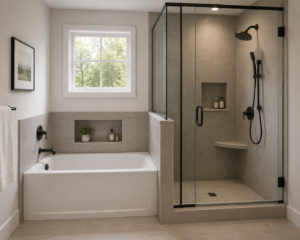
Vanity drawers can provide accessible everyday storage, while recessed niches can organize shower products without occupying extra floor area. Medicine cabinets and vertical cabinetry can use wall space efficiently.
A strong ensuite renovation design integrates storage naturally rather than adding it after the room is complete.
Use Lighting in Layers
A single ceiling fixture rarely provides ideal bathroom lighting.
General lighting should illuminate the entire room, while focused lighting near the mirror supports shaving, grooming, and other detailed tasks. Additional shower lighting may improve both visibility and atmosphere.
Natural light is also valuable where available, although privacy should remain a priority.
Select Materials for a Wet Environment
Bathrooms experience regular humidity, water exposure, and temperature changes. Therefore, materials should be selected for more than visual appeal.
Surfaces around showers and tubs require appropriate waterproofing systems beneath the visible finishes. Flooring should provide suitable durability and practical maintenance.
For homeowners considering professional renovation assistance, an experienced bathroom renovation contractor can help assess construction considerations before work begins.
Ventilation Should Never Be an Afterthought
Humidity can linger after showers, particularly in smaller bathrooms. Effective ventilation helps remove excess moisture and supports a healthier indoor environment.
Ventilation planning should happen early during an ensuite renovation because duct routing and fixture placement can influence construction.
Create Visual Space Without Sacrificing Function
Small bathrooms can feel larger through thoughtful design.
Consistent materials reduce visual interruptions, while clear shower glass can maintain sightlines across the room. Wall-mounted elements may expose more floor area and create a lighter appearance.
However, avoid sacrificing useful storage simply to achieve a minimalist look. The room still needs to function comfortably every day.
Think Beyond Current Trends
Bathroom trends change quickly. Permanent elements such as tile, cabinetry, and major fixtures often benefit from a more timeless approach.
Personality can still enter through mirrors, hardware, accessories, towels, and decorative details that are easier to update later.
Conclusion
A successful ensuite renovation combines comfort, durability, storage, ventilation, and thoughtful design. Instead of concentrating only on appearance, homeowners should consider how the room supports daily routines. Efficient layouts, appropriate wet-area materials, layered lighting, and integrated storage can turn even a compact ensuite into a practical and relaxing private space.
About The Author