EV Charger Installations Near Me: Building a Reliable Home Charging Setup
Electric vehicles are becoming a practical part of everyday transportation, and home charging can make ownership considerably more convenient. Instead of depending entirely on public charging locations, homeowners can plug in after returning home and prepare their vehicle for upcoming journeys. Searching for ev charger installations near me is often the starting point for creating a charging setup that works safely with a home’s electrical system.
A successful installation is not simply about finding an empty wall for charging equipment. Electrical capacity, parking location, wiring distance, circuit requirements, and future vehicle needs all deserve attention. Careful planning creates a charging arrangement that remains practical long after installation day.
Understanding Your Home Charging Requirements
No two households have identical charging needs. A driver with a short daily commute may have different requirements from someone who travels long distances several times each week.
Before arranging ev charger installations near me, consider your typical mileage, charging schedule, parking habits, and the amount of time the vehicle normally remains at home.
Start With Your Driving Routine
Your daily driving pattern provides useful information when planning charging infrastructure. If the vehicle returns home at approximately the same time every evening, overnight charging may fit naturally into your routine.
Households with multiple drivers or electric vehicles may require more detailed planning. A professional assessment can help determine an appropriate electrical arrangement without making assumptions about how the system will be used.
Why the Electrical Panel Matters
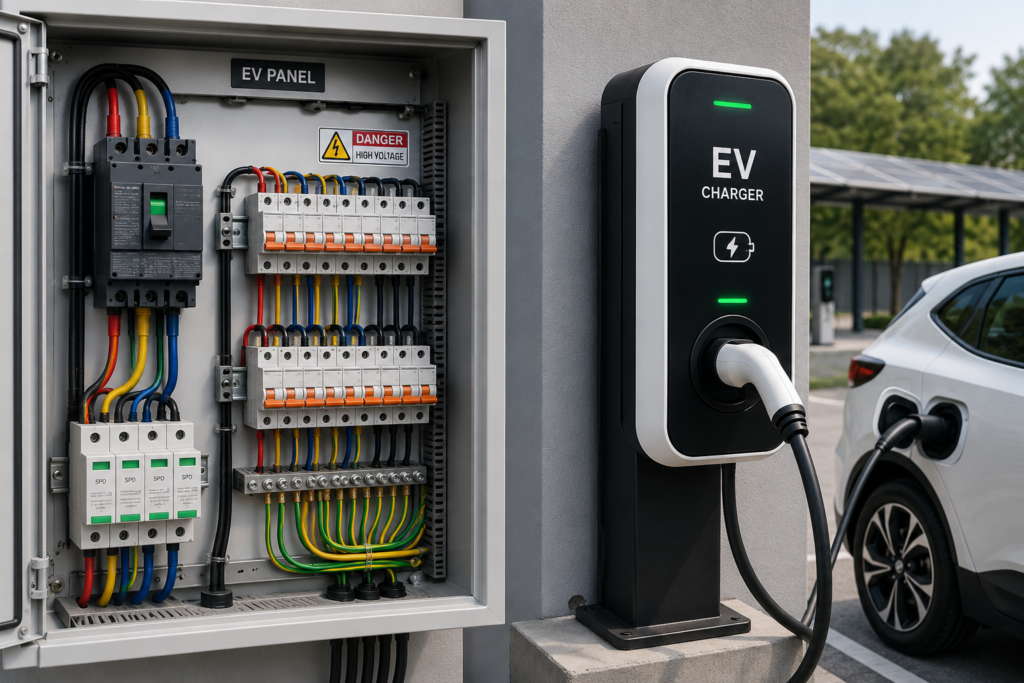
An EV charging circuit adds electrical demand to a property. Therefore, evaluating the existing panel is a key part of professional ev charger installations near me.
An electrician can review available capacity and existing electrical loads before determining how charging equipment should be connected.
Available Capacity Should Be Verified
A home’s panel may already support heating, cooling, cooking appliances, laundry equipment, and numerous everyday devices. Adding another significant electrical load requires proper evaluation.
Older homes deserve particular attention because their electrical systems may have been designed before modern household power demands became common.
Working with a qualified local EV charging specialist can help homeowners understand whether the existing electrical infrastructure is suitable or whether modifications should be considered.
Finding the Right Charger Location
Convenient placement makes an enormous difference in everyday use. The charging cable should comfortably reach the vehicle while avoiding unnecessary interference with walking areas, doors, storage spaces, or other vehicles.
When planning ev charger installations near me, think carefully about where the vehicle actually spends most of its time.
Indoor and Outdoor Considerations
Garages often provide convenient installation locations, but outdoor parking can also be accommodated when appropriate equipment and installation methods are used.
Weather exposure, mounting surfaces, wiring routes, and accessibility can influence the final design. The shortest electrical route is not automatically the most convenient charging location, so both electrical and practical factors should be considered.
Safety Should Guide the Installation
Vehicle charging equipment can operate for extended periods, making proper electrical installation particularly important. Circuit protection, conductor sizing, grounding, connections, and equipment compatibility all contribute to dependable operation.
Professional ev charger installations near me should account for these technical requirements from the beginning.
Avoid Improvised Electrical Solutions
A charging setup should be designed for its intended electrical demand. Attempting to use unsuitable wiring or an electrical circuit that was not designed for the required load can create problems.
A dedicated and properly planned installation provides a stronger foundation for regular charging.
Preparing Before the Electrician Arrives
Homeowners can make an installation assessment more productive with a little preparation. Make sure the electrical panel is accessible and identify the parking position where charging would be most convenient.
You should also know basic information about the vehicle’s charging requirements.
Discuss Future Plans Early
Tell the electrician if you expect another electric vehicle to join the household. Future plans can affect decisions about electrical capacity, panel space, wiring routes, and charger placement.
People searching for ev charger installations near me sometimes focus exclusively on their current vehicle. Considering what might change over the next several years can result in a more flexible installation.
Creating a Cleaner Everyday Charging Routine
One of the strongest advantages of home charging is simplicity. The vehicle arrives home, gets connected, and can recharge while it is parked.
A thoughtfully positioned charger makes this routine easier. Cables can remain manageable, parking does not need to change dramatically, and connecting the vehicle becomes a straightforward habit.
That convenience is one reason ev charger installations near me have become an important consideration for homeowners transitioning to electric transportation.
Questions Worth Asking Before Installation
A productive conversation with an installer should cover more than installation timing. Ask how the home’s electrical capacity will be assessed, where the equipment could be positioned, and whether additional electrical work may be required.
It is also helpful to understand how the proposed setup accommodates normal parking habits and possible future charging requirements.
Look at the Complete Electrical Picture
The charger is only one part of the project. Wiring, circuit protection, panel capacity, installation location, and compliance requirements all work together.
When comparing ev charger installations near me, homeowners should look for an installation approach that considers this complete picture.
Conclusion
Home charging can turn EV ownership into a much more convenient experience, but dependable charging begins with suitable electrical infrastructure. A careful assessment can identify available capacity, determine an appropriate circuit, and establish a practical location for charging equipment.
Choosing ev charger installations near me with professional electrical planning helps create a system designed around your home and driving routine. When safety, convenience, electrical capacity, and future needs are considered together, home charging can provide reliable support for everyday electric transportation.
About The Author