Copper Mining: Understanding Its Role in Modern Infrastructure
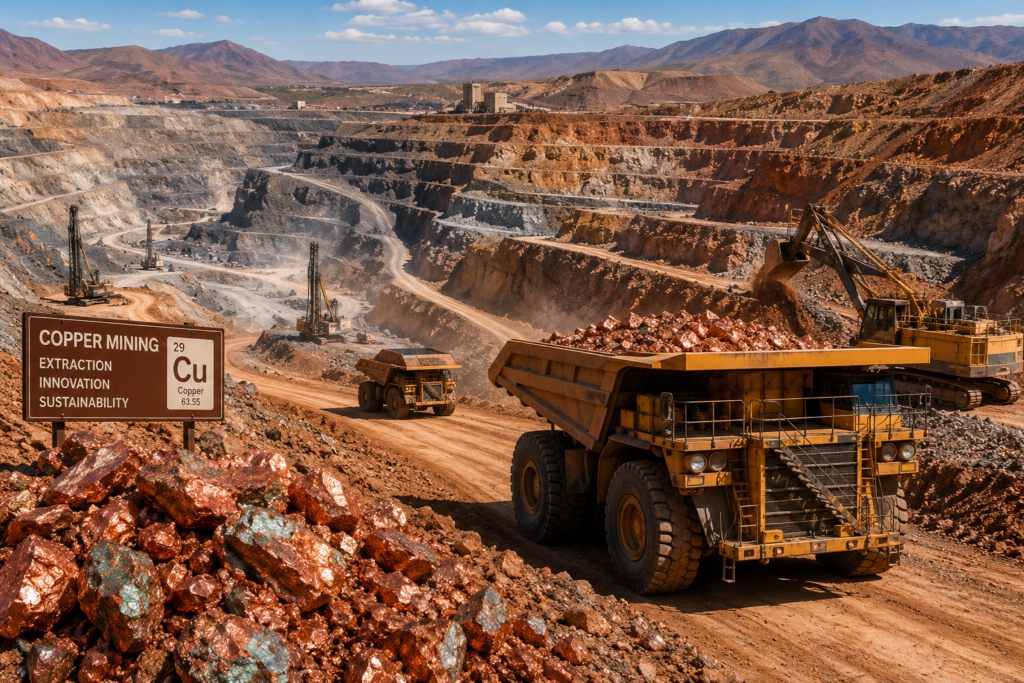
Copper Mining remains an important part of the mineral sector because copper supports many of the systems people depend on every day. From electrical networks and transportation infrastructure to construction and industrial equipment, copper has a broad range of applications. As demand for efficient infrastructure continues to develop, understanding how copper is explored, extracted, and managed has become increasingly relevant.
Modern mining is far more than simply removing material from the ground. It involves geological research, engineering, environmental planning, worker safety, transportation, and long-term site management. Together, these elements shape how a mining operation progresses from an early geological concept to an active site.
How Copper Mining Begins
Every potential mine starts with geology. Specialists study rock formations and mineral characteristics to identify areas that may contain meaningful copper deposits. Exploration may include geological mapping, sampling, drilling, and laboratory analysis.
The information gathered during exploration helps determine the size, depth, shape, and concentration of a mineral deposit. Engineers can then assess whether the geological conditions support further development.
This early stage is especially important because accurate information influences nearly every decision that follows.
Planning Before Extraction
A viable mineral deposit does not automatically become a mine. Considerable planning takes place before construction or extraction begins.
Engineers examine potential mine layouts, access routes, material movement, water management, and supporting infrastructure. Environmental specialists evaluate existing conditions and identify measures designed to manage potential effects.
Regulatory requirements also play an important role. Depending on the location and project characteristics, proposals may require technical studies, permits, reviews, and monitoring plans before development can advance.
Technology in Modern Copper Mining
Technology has changed how mineral operations collect information and manage day-to-day activities. Digital mapping, geological modeling, automated monitoring, and advanced equipment can provide teams with more detailed information about underground conditions and operational performance.
Data also helps engineers understand how materials move through a site. Better information can support planning, equipment scheduling, maintenance, and resource management.
Safety technology is another significant area of development. Monitoring systems, communication tools, ventilation planning, and equipment controls can help teams identify and manage workplace risks.
From Ore to Useful Material
Extracting mineral-bearing rock is only one stage of the process. Once material reaches the appropriate facilities, it must be processed to separate copper-bearing minerals from surrounding rock.
The exact method depends on the characteristics of the deposit. Crushing and grinding generally reduce material to smaller particles. Additional processing can then concentrate valuable minerals.
Efficient processing matters because mineral deposits contain varying concentrations of copper. Careful recovery allows more value to be obtained from extracted material while reducing unnecessary handling.
Environmental Planning Throughout the Mine Life
Environmental considerations begin long before extraction. Baseline studies can examine water, vegetation, wildlife, soils, and surrounding land conditions. These findings provide a reference point for future monitoring.
Water management is often a major focus. Sites may need systems for collecting, directing, storing, treating, and monitoring water.
Waste-rock management and land disturbance also require planning. Engineers must consider where materials will be stored and how those areas will be managed over time.
Importantly, environmental planning does not end when production stops. Closure and reclamation considerations can influence decisions throughout the operational life of a site.
Economic Connections to Surrounding Communities
Mining can create demand for a broad range of skills. Engineers, equipment operators, mechanics, electricians, environmental specialists, geologists, administrators, and safety professionals may all contribute.
Operations may also rely on transportation, maintenance, construction, technical support, and other local or regional capabilities.
However, the relationship between mining and communities extends beyond employment. Communication, transparency, land-use considerations, and long-term planning can influence how communities understand proposed developments.
Why Copper Continues to Matter
Copper combines electrical conductivity, durability, and versatility. These characteristics make it useful across electrical systems, buildings, machinery, transportation, communications, and manufacturing.
As infrastructure becomes increasingly electrified, dependable access to industrial minerals remains an important consideration.
Conclusion
Copper Mining brings geology, engineering, environmental management, technology, and workforce expertise together in one complex activity. A modern operation depends on careful planning across the entire mine life, from early exploration through extraction, processing, monitoring, closure, and reclamation.
Understanding this complete process provides a clearer picture of how copper resources can move from underground geological deposits into materials that support modern infrastructure.
About The Author