Drywall Taping Knife: Essential Control for Smooth Joint Finishing
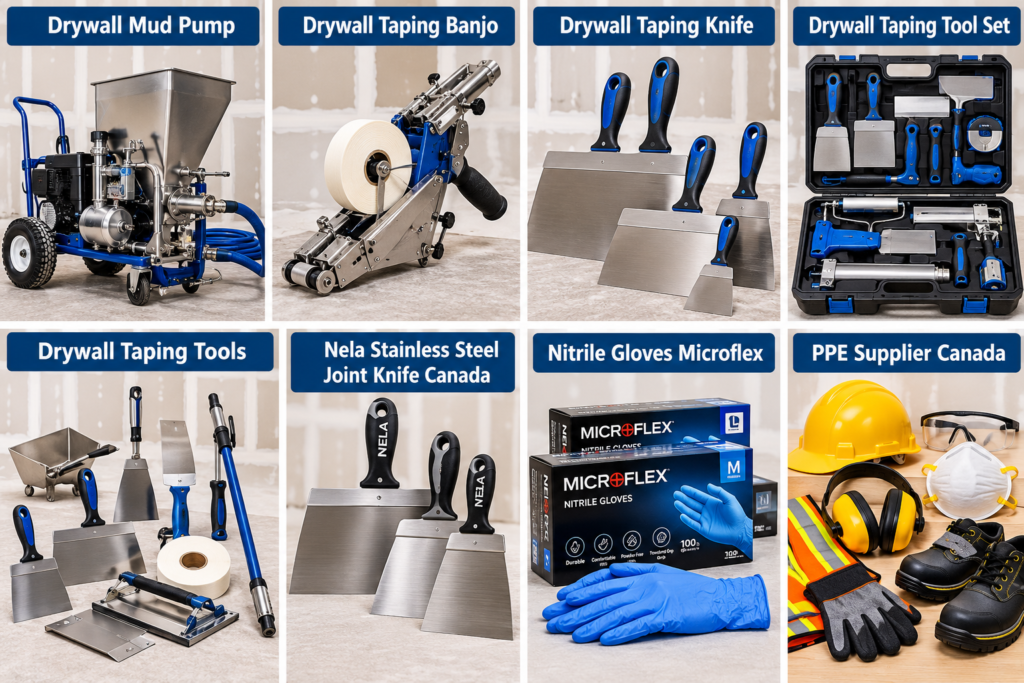
Few drywall tools are as versatile as a drywall taping knife. From embedding tape to feathering compound and making final corrections, this straightforward hand tool plays a role throughout the finishing process.
Its design may appear simple, but achieving a smooth finish requires choosing an appropriate size and developing good hand control.
What Is a Drywall Taping Knife?
A drywall taping knife consists of a broad blade attached to a handle. It is used to spread, smooth, remove, and shape joint compound.
Different blade widths serve different stages of drywall finishing.
Narrower knives provide control in smaller areas, while wider options can help feather compound across broader sections.
Why the Taping Knife Remains Important
Modern drywall work may involve specialized finishing equipment, yet hand tools remain valuable.
Precision Where It Matters
Machines and larger finishing tools may not reach every detail. A drywall taping knife allows the user to make targeted adjustments around corners, patches, fasteners, and other difficult areas.
Useful Across Multiple Stages
The same general tool category can assist with initial taping, additional coats, repairs, and touch-ups.
This versatility makes the drywall taping knife useful for professionals and people learning drywall finishing.
Choosing the Right Blade Width
There is no single ideal size for every task.
Narrower Knives
Smaller blades can provide greater control when applying compound to confined areas, covering fasteners, or handling detailed repair work.
They can also be convenient during initial application.
Wider Knives
As a joint progresses through finishing coats, the compound usually needs to extend farther beyond the seam.
A wider drywall taping knife helps spread material across a broader surface and feather the edges into the drywall.
Using progressively wider coverage can make the finished joint less noticeable.
Understanding Blade Pressure
Pressure has a major influence on the result.
Holding the drywall taping knife at a low angle can leave more compound behind, while increasing the angle or pressure can remove more material.
Learning to adjust these variables is one of the foundations of good hand finishing.
Feather the Edges
A visible ridge along the edge of a joint creates additional sanding work.
Apply slightly greater pressure toward the outside edge of the drywall taping knife when appropriate. This helps create a thinner transition between compound and the surrounding board.
Avoid Applying Too Much Compound
Beginners often assume that heavy coats will hide joints more effectively.
In practice, excessive material can increase drying time and sanding. Thin, controlled coats are generally easier to manage.
Use the drywall taping knife to remove unnecessary compound rather than leaving large buildups that will require correction later.
Keep the Blade Clean During Work
Dried pieces of compound can create lines in a fresh coat.
Regularly inspect and wipe the drywall taping knife while working. If hardened material collects along the blade, remove it before continuing.
A clean edge contributes directly to a cleaner pass.
Working on Butt Joints
Butt joints can require broader feathering because they lack the recessed profile found along many factory edges.
Rather than building a narrow mound directly over the seam, spread compound farther across the surrounding surface.
A wider drywall taping knife can help create this gradual transition.
Handling Repairs and Touch-Ups
The tool is equally useful beyond new installations.
Small dents, damaged areas, and previously finished joints may require additional compound. A drywall taping knife gives the worker direct control over exactly where material is added or removed.
For localized corrections, this control can be more practical than larger equipment.
Cleaning and Storage
Wash compound from the drywall taping knife after each work session.
Pay attention to the blade edge and the connection between blade and handle. Dried material left behind can interfere with future finishing.
Dry the tool appropriately before storage and avoid conditions that could damage the blade.
A straight, clean blade is essential for predictable results.
Practice Creates Better Finishes
Learning drywall finishing is largely about developing feel.
With practice, users learn how much compound to load, how firmly to press, what angle to maintain, and when a joint has been worked enough.
The drywall taping knife provides immediate feedback, making it an excellent tool for developing those fundamental skills.
Conclusion
A drywall taping knife combines simplicity, control, and versatility. It can assist with tape embedding, compound application, feathering, repairs, and final touch-ups.
Selecting suitable blade widths for each stage makes the work easier, while controlled pressure helps reduce ridges and unnecessary material buildup.
Most importantly, consistent technique matters more than rushing. A clean drywall taping knife in experienced hands can produce smooth transitions and carefully finished joints across projects of virtually any size.
About The Author