Deck Repairs Near Me — A Homeowner’s Inspection Guide
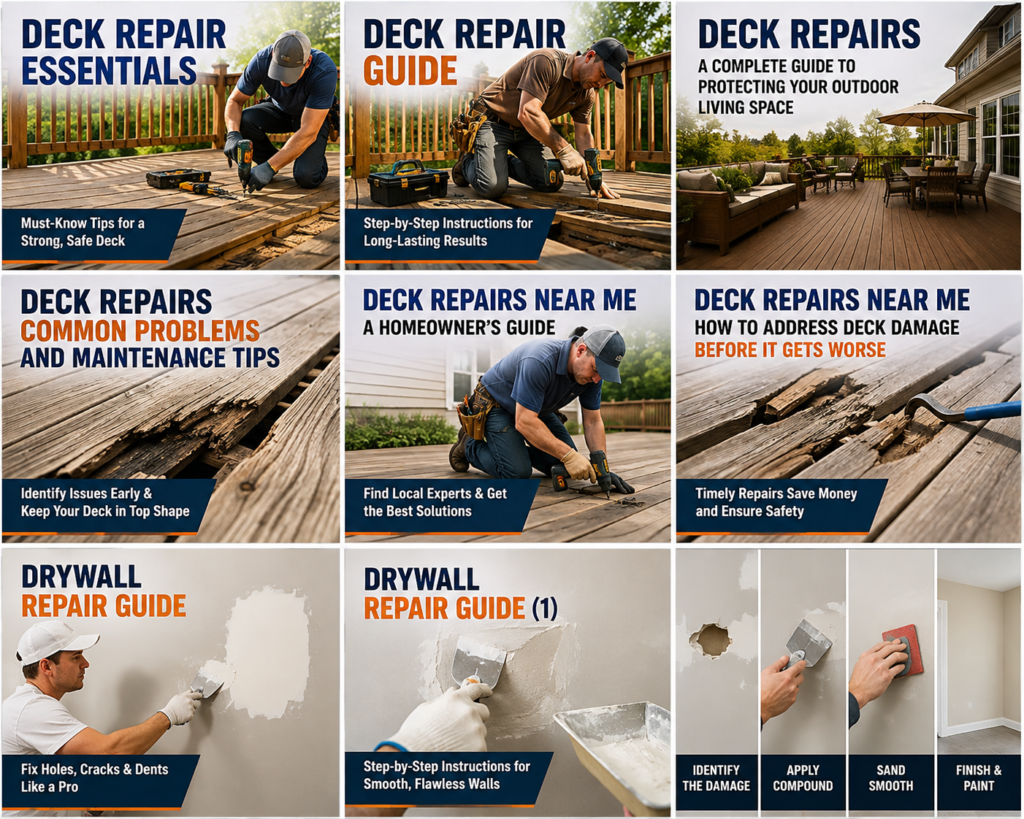
When outdoor wear becomes noticeable, searching for deck repairs near me can be the first step toward restoring a more dependable outdoor area. Before requesting repairs, homeowners can perform a simple visual inspection to identify where problems are occurring and whether multiple sections need attention.
The goal is not to perform a technical structural evaluation yourself. Instead, it is to gather useful observations about the deck’s current condition.
Zone One: The Main Decking Area
Begin with the boards underfoot.
Look for cracks, splinters, raised edges, looseness, or sections that appear softer or more deteriorated than surrounding material. Pay particular attention to locations that stay shaded or frequently become wet.
Check whether debris has accumulated between boards, since trapped organic material can slow drying.
Zone Two: Railings
Next, examine the railing system.
Look closely at posts, rails, and connection points. During normal use, note any section that feels noticeably loose.
When homeowners search for deck repairs near me, railing concerns should be clearly mentioned because they can affect how safely the space is used.
Zone Three: Stairs
Move to the stairs and inspect every tread individually.
Look for worn edges, cracks, movement, or uneven areas. Check handrails and visible connections as well.
Stairs often experience concentrated traffic, so deterioration can appear there even when the main deck remains in relatively good condition.
Zone Four: Moisture-Prone Locations
Now examine areas where water may remain longer.
These can include spaces beneath planters, furniture, outdoor storage, or dense shade. Corners that collect leaves should also receive attention.
Regularly moving movable objects allows hidden areas to dry and makes inspection easier.
Zone Five: Visible Supports and Connections
Where safely accessible, observe visible structural elements without crawling into unsafe spaces or dismantling anything.
Look for obvious deterioration, unusual movement, or damaged connections. Concerns in these areas should be evaluated rather than covered cosmetically.
Create an Organized Repair List
After the inspection, write down concerns by location. For example, separate notes into decking, railings, stairs, and other areas.
This approach helps when contacting local deck repair professionals, because you can clearly explain what you have noticed.
A structured list can also prevent less obvious problems from being forgotten once work begins.
Consider Timing and Weather
Outdoor repairs can be affected by weather conditions. Certain materials and finishing processes require suitable temperatures or dry periods.
If repairs are followed by refinishing, planning the stages in the correct order is important.
Repair First, Improve Appearance Second
Cosmetic improvements should not substitute for necessary repairs.
If boards, stairs, or railings require physical attention, resolve those concerns before concentrating on appearance. This creates a sounder base for later maintenance.
Continue the Inspection Habit
Searching for deck repairs near me should not be something homeowners do only after significant deterioration appears.
A quick seasonal inspection can identify changes much sooner. Compare current conditions with previous observations and pay attention to areas that have needed work before.
Conclusion
A deck is exposed to demanding conditions throughout the year, so gradual wear is expected. Dividing an inspection into clear zones makes maintenance easier and helps homeowners identify concerns involving decking, stairs, railings, moisture, and visible connections.
When deck repairs near me become necessary, having a detailed understanding of the problem areas can improve communication and planning. Combined with regular cleaning and seasonal checks, timely repair work can help keep an outdoor living area functional, comfortable, and ready for continued use.
About The Author