Log Loading Trailer: Improving Timber Collection From the Ground Up
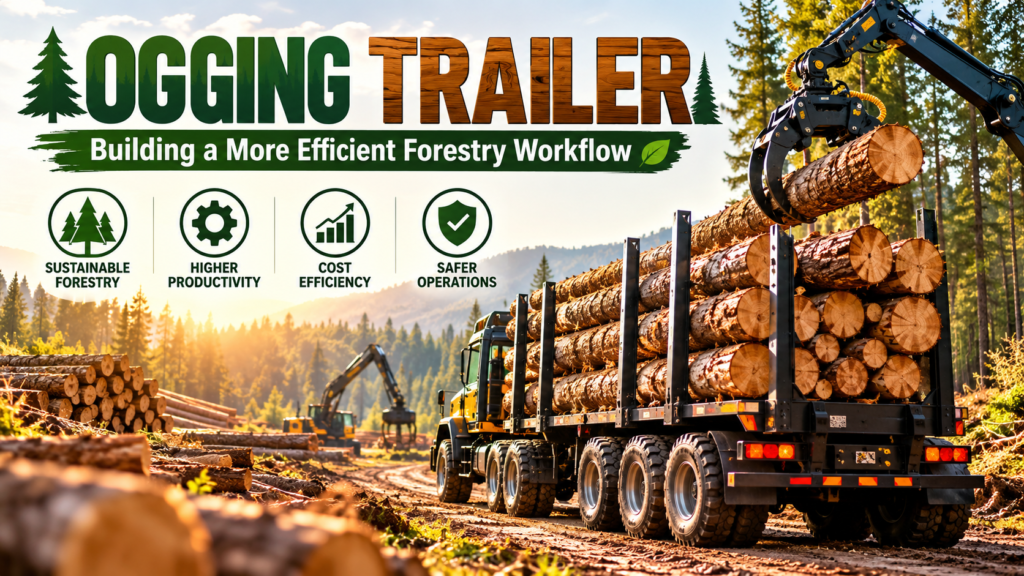
A log loading trailer is most valuable when it helps solve one of forestry’s recurring challenges: getting heavy, awkward timber from the ground onto transport equipment efficiently. When loading and hauling are planned as one continuous process, operators can reduce machine movements, organize loads more effectively, and keep harvested timber moving toward storage or processing.
Loading Is Where Efficiency Begins
Transportation cannot begin until logs are safely positioned on the trailer.
Manual methods become increasingly demanding as log diameter and length increase. Mechanical handling can make the loading stage more controlled and repeatable.
A log loading trailer can therefore influence productivity before the wheels ever begin moving.
Organize Timber Before the Trailer Arrives
One of the simplest ways to improve loading speed is to prepare the site.
Place timber in accessible groups whenever practical. Align logs so they can be approached without excessive trailer repositioning.
Good preparation allows the log loading trailer to spend more time handling timber and less time navigating around an unorganized worksite.
Choose the Best Trailer Position
Positioning affects both efficiency and stability.
Select ground that provides a secure working base whenever possible. Avoid unnecessary side slopes or unstable surfaces during loading.
The log loading trailer should be close enough to collected timber for efficient handling while retaining adequate space for safe operation.
Build a Balanced Load
Each log changes the trailer’s weight distribution.
Operators should place timber deliberately and monitor the load throughout the process. Correcting balance early is generally easier than reorganizing a completed load.
Keep Logs Organized
When different timber sizes or destinations are involved, loading them systematically can simplify unloading.
For example, material intended for one processing stage can be kept together rather than mixed randomly throughout the load.
This organizational benefit can make a log loading trailer useful beyond transportation alone.
Account for Real Woodland Conditions
Forest floors rarely resemble prepared yards. Roots, rocks, mud, slopes, and confined spaces influence how equipment can be positioned.
Before beginning work, inspect the area and identify a practical route for loaded travel.
Operators considering equipment for their own properties can explore local timber-handling information while evaluating how terrain affects trailer selection.
Establish a Maintenance Routine
Loading equipment experiences repeated mechanical stresses. Inspections should therefore focus on components involved in both hauling and timber handling.
Check the frame, tires, connections, load-support areas, hydraulic components, and handling mechanisms.
A clean log loading trailer is easier to inspect because leaks, cracks, loose components, and abnormal wear are more visible.
Record Recurring Issues
If the same adjustment or repair repeatedly becomes necessary, document it. Patterns can reveal operating conditions or maintenance needs that deserve closer attention.
Simple records can improve long-term equipment management.
Prioritize a Safe Loading Zone
Mechanical timber handling requires controlled working space.
Keep bystanders away from the loading area and never allow anyone beneath suspended logs. Operators should remain aware of potential swing and roll zones throughout each movement.
The log loading trailer should always be used within its specified limits.
Reduce Empty Movement
Efficiency improves when routes and loads are planned intelligently.
Whenever possible, coordinate timber collection so the trailer moves logically through the property rather than repeatedly returning across the same ground.
Reducing unnecessary travel can save time and limit wear.
Conclusion
A log loading trailer can help transform timber collection from a series of separate tasks into a coordinated loading and transportation process. Worksite organization, stable positioning, balanced loads, thoughtful routing, routine maintenance, and controlled loading practices all contribute to better results. Operators who optimize the complete loading cycle can achieve meaningful productivity gains without sacrificing careful equipment use.
About The Author